7 Bathroom Tile Trends for Waterloo Homes in 2026
Explore bathroom tile trends for Waterloo homes in 2026, with practical notes on texture, warm color, shower tile, grout, slip resistance, and layout.
Key answer
Waterloo bathroom tile is getting warmer and more practical
The strongest bathroom tile trends for Waterloo homes in 2026 are warm, textured, and more personal than the all-white bathrooms that dominated for years. Homeowners are still asking for calm spa-like rooms, but the tile choices are shifting toward earthy color, handmade-look surfaces, softer patterns, continuous shower layouts, and quieter grout.
The practical side matters just as much as the look. A bathroom is a wet room, so the tile has to work with waterproofing, slope, slip resistance, ventilation, grout maintenance, and cleaning habits. A trend is only worth choosing if it still performs after daily showers, winter humidity, and regular family use.
This guide is for Waterloo homeowners planning a bathroom tile installation, shower renovation, ensuite update, or floor replacement and trying to choose a finish that feels current without becoming dated quickly.
1. Warm neutrals instead of cold white and gray
The biggest shift is away from stark white, cool gray, and high-contrast marble looks. Warmer neutrals are taking over: cream, clay, sand, mushroom, taupe, soft greige, muted olive, terracotta, and stone colors with brown or green undertones.
This works well in Waterloo homes because warm tile can soften a bathroom that has bright winter light, white fixtures, and hard surfaces. It also pairs naturally with oak vanities, brushed nickel, brass, linen-look walls, and softer lighting.
Where it can fail is undertone mismatch. A tile that looks beige in a showroom may look yellow beside a cool counter or pink beside a warm vanity. Bring samples home and check them under daylight and bathroom lighting before ordering.
2. Handmade-look and zellige-style shower walls
Handmade-look tile, zellige-inspired tile, and hand-glazed ceramic are popular because they bring movement to a bathroom without relying on loud pattern. The glaze variation catches light across a shower wall, vanity backsplash, or tub surround and makes the room feel less manufactured.
This trend works best when the rest of the bathroom is controlled. Pair a textured tile with simple plumbing fixtures, quiet counters, and a grounded vanity finish so the surface variation feels intentional.
The installation caveat is cleaning and layout. Irregular edges and glossy texture can be beautiful, but they need thoughtful grout joints, careful cuts, and a location that matches the homeowner's maintenance tolerance. In a busy shower tile installation, the surface should still be practical to wipe down.
3. Tile-drenched showers and continuous surfaces
Tile drenching means using the same tile or a closely related tile across several bathroom surfaces: shower walls, shower floor, main floor, niche, tub face, or vanity wall. The goal is a room that feels architectural instead of broken into separate decorative zones.
For smaller Waterloo bathrooms, this can make the room feel calmer and larger because the eye is not stopping at multiple transitions. A continuous floor that moves toward a curbless shower can also make an ensuite feel more custom.
This works best when slope, drain location, tile size, and waterproofing are planned early. Shower floors still need drainage, so the main floor tile may need a companion mosaic or careful cuts inside the wet area. The hidden waterproofing and tile prep matter as much as the visible tile.
4. Soft checkerboards and quiet geometric floors
Checkerboard tile is returning, but the new version is softer than the high-contrast black-and-white floor. Think ivory with warm gray, cream with clay, muted green with linen, or stone-look porcelain in two gentle tones.
This is a good option when the walls stay simple and the floor can carry the personality. It works in powder rooms, larger bathrooms, and ensuites where the vanity and shower surfaces are quiet enough to let the floor become the focal point.
The detail to watch is scale. Tiny high-contrast checks can feel busy in a small bathroom, while mid-scale checks or muted geometric layouts can feel more refined. Pattern also increases layout planning, so start points and cuts around the toilet, vanity, and threshold need to be decided before tile is set.
5. Slim vertical tile and matchstick texture
Slim vertical tile, fluted looks, matchstick tile, and narrow stacked rectangles are being used to create height and tailored texture. They can make a shower wall, vanity backsplash, or niche feel more detailed without adding a bold color.
This trend works best in focused areas. A full room of narrow tile can be intense and grout-heavy, but a vanity wall or shower feature can look crisp when paired with larger, calmer tile elsewhere.
The practical caveat is grout and alignment. More joints mean more maintenance, and vertical tile makes uneven walls easier to notice. If the wall is not prepared properly, the finished surface can look wavy rather than refined.
6. Large-format porcelain for calmer bathrooms
Large-format porcelain remains one of the most useful bathroom trends because it reduces grout lines and creates a cleaner, more expansive surface. Stone-look porcelain, concrete-look porcelain, and warm limestone effects can create a spa-like room without the maintenance of many natural stones.
This is especially useful for bathroom floor tile, larger shower walls, and ensuites where the goal is a quiet premium finish. Fewer grout joints can also make routine cleaning easier.
Large-format tile is not a shortcut, though. It demands flatter substrates, careful mortar coverage, proper movement joints, and clean handling around walls that are not perfectly square. If the prep is rushed, large tile can show lippage and uneven edges more clearly than smaller tile.
7. Statement tile in smaller, controlled doses
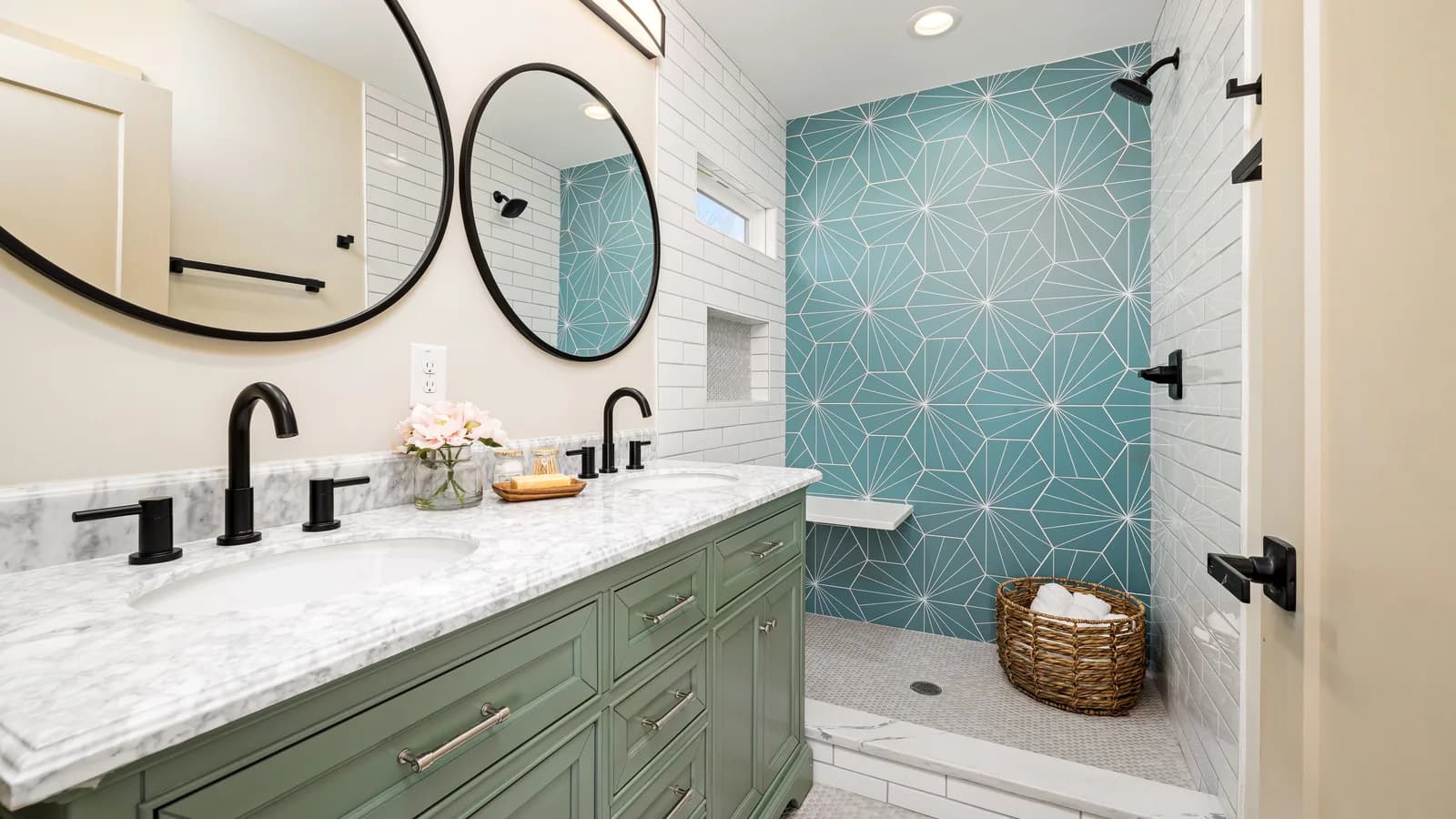
One of the smarter 2026 trends is restraint. Instead of using a bold tile everywhere, homeowners are using stronger color, pattern, or texture in a niche, vanity wall, tub apron, shower back wall, or powder room.
This approach works because it gives the bathroom personality without making every surface compete. A saturated green niche, a clay-toned shower wall, or a patterned vanity backsplash can be memorable while the rest of the room stays calm.
For long-term value, choose the statement area carefully. The best focal point is usually where the eye naturally lands when entering the room. Avoid placing expensive accent tile in a spot that gets hidden by a door, towel bar, or shower glass frame.
What makes a bathroom tile trend worth choosing?
A trend is worth choosing when it supports the room's function, not just the photo. In a bathroom, that means the tile should suit wet exposure, cleaning needs, grout maintenance, slip resistance, lighting, ventilation, and the age of the home.
For shower floors, texture and smaller formats can help with slope and traction, while very glossy or very smooth tile may be better on walls than floors. For walls, texture can add depth, but heavy texture behind a busy shower may require more cleaning.
If you are renovating an older Waterloo bathroom, start with the condition of the substrate and waterproofing. If the room has previous water damage, uneven floors, poor ventilation, or dated backer board, the best design choice is to correct the assembly before focusing on the finish.
Ready to plan bathroom tile in Waterloo?
The best bathroom tile trends for Waterloo homes in 2026 are not about chasing every new look. They are about choosing warmth, texture, scale, and layout in a way that still works with the room's wet-area requirements.
If you want a calm ensuite, large-format porcelain and warm neutrals may be the right direction. If you want more character, use handmade-look tile, soft pattern, or a saturated color in a controlled area. If you want a seamless shower, plan the waterproofing, slope, drain, and tile size before committing to the final surface.
Moonka Tiles Co. installs bathroom tile, shower tile, floor tile, and custom tile features across Waterloo Region. Send your bathroom details through the contact form.
Frequently asked questions
What bathroom tile colors are trending in Waterloo homes for 2026?
Warm neutrals, soft clay, muted green, sand, taupe, cream, greige, terracotta, and deeper earthy tones are trending. The strongest choices feel warm and natural without making the bathroom too dark or difficult to match with fixtures, counters, and vanities.
Are zellige-style tiles good for showers?
Zellige-style tiles can work on shower walls when the layout, grout, and cleaning expectations are planned carefully. Their uneven surfaces and glaze variation add depth, but they may require more maintenance than smooth porcelain or ceramic in heavy-use showers.
Is large-format tile a good bathroom trend?
Large-format porcelain is a strong bathroom choice when the surface is properly prepared. It creates fewer grout lines and a calmer look, but it needs flat substrates, correct mortar coverage, and careful layout to avoid lippage and awkward cuts.
What bathroom tile trends should I avoid?
Avoid any trend that ignores the room's function. Very smooth tile on wet floors, high-texture tile in hard-to-clean areas, busy pattern on every surface, or large-format tile over an uneven substrate can create maintenance and performance issues.
When should I choose shower tile before renovation starts?
Choose shower tile early, before waterproofing and layout are finalized. Tile size affects drain planning, slope, niche placement, trim details, grout joints, and whether the shower floor needs mosaic, envelope cuts, or a companion tile.
Sources and further reading
Technical claims are checked against the following primary or specialist references. Product-specific instructions always take precedence for the assembly being installed.
- Homes & Gardens: bathroom tile trends for 2026Used for: Current design-editor commentary on warmer colour, expressive pattern, handcrafted surfaces, texture, and more personalized bathroom tile schemes.
- Tile Council of North America: ceramic tile FAQUsed for: Tile classifications, wet-area assembly principles, and the distinction between tile or grout and the water-management system below.
- Tile Council of North America: current ANSI tile standardsUsed for: The standards framework behind tile material, installation, mortar, grout, and product-use recommendations.