Types of Tile for Showers: What Works Best?
Compare shower tile types for walls and floors: porcelain, ceramic, mosaic, glass, stone, large-format tile, slip planning, grout, and maintenance.
Key answer
Porcelain is the safest default
For most Waterloo Region bathrooms, porcelain is the safest default shower tile because it is dense, low-maintenance, water-resistant, and available in enough formats to work on walls, floors, niches, and benches. Ceramic can be excellent on shower walls. Mosaics are often useful on shower floors. Natural stone can be beautiful, but it may need sealing and usually needs more careful maintenance. Glass works best as an accent or controlled wall feature.
The best type of tile for a shower depends on where it goes. Shower walls, shower floors, niches, curbs, benches, and bathroom floors do not all need the same material or format. A large-format porcelain wall tile may be perfect on a flat wall and wrong on a small sloped shower pan. A mosaic may be practical on the floor and too grout-heavy if used everywhere.
This guide is for homeowners planning a shower tile installation or full bathroom renovation and trying to choose a tile that still looks good after years of water, cleaning, soap, and grout maintenance.
Shower tile comparison by material
| Tile type | Best shower use | Main caution |
|---|---|---|
| Porcelain tile | Shower walls, bathroom floors, many shower floors, niches, benches, and large-format designs. | Dense porcelain is harder to cut and install, especially in large formats or around fixtures. |
| Ceramic tile | Shower walls, decorative features, classic subway layouts, and lower-impact vertical surfaces. | Not every ceramic tile is rated for wet areas or floors, so product suitability has to be checked. |
| Mosaic tile | Shower floors, niches, accent bands, and areas that need to follow slope or small details. | More grout joints mean more cleaning and more visible grout choices. |
| Glass tile | Accent walls, niches, bands, and reflective detail areas. | Can be harder to cut cleanly and may show thinset, scratches, water spots, or movement. |
| Natural stone tile | Premium shower walls, calm spa-like bathrooms, and selected floor areas when properly specified. | Needs sealing, careful cleaning, and realistic expectations around staining, etching, and variation. |
| Large-format tile | Shower walls, tub surrounds, and bathrooms where fewer grout lines are the goal. | Requires flatter walls, careful handling, correct mortar coverage, and drainage planning if used on floors. |
The table is a starting point. The exact tile rating, finish, texture, edge type, thickness, size, and manufacturer guidance matter more than the broad material name.
Porcelain tile for showers
Porcelain is the material we recommend most often for showers because it balances performance and design. It is dense, durable, and available in stone looks, concrete looks, handmade looks, terrazzo looks, matte finishes, polished wall finishes, large formats, mosaics, and companion trim pieces.
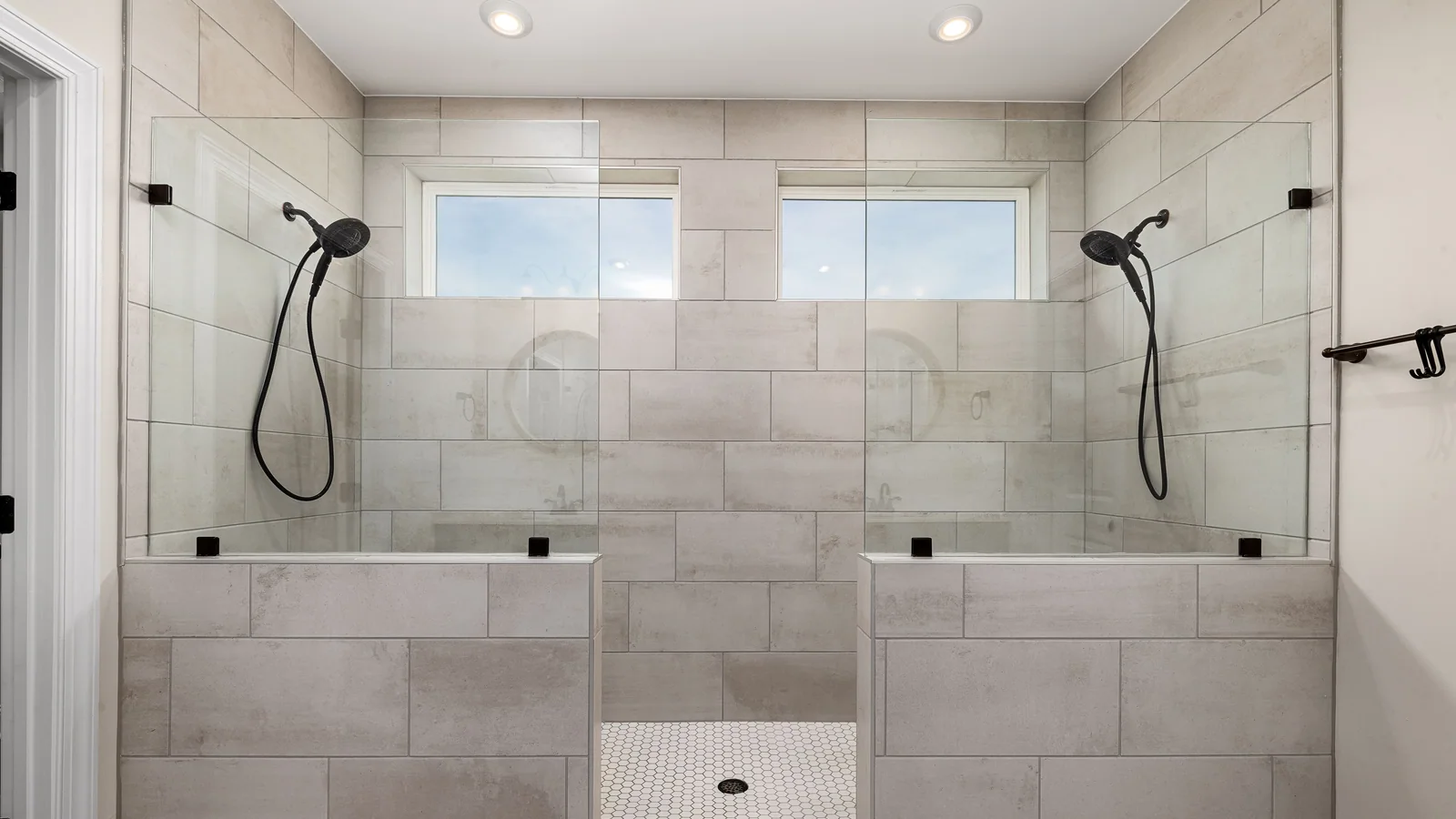
For shower walls, porcelain can create a calm, premium surface with fewer grout interruptions. A 12-by-24 inch tile, 24-by-48 inch tile, or slab-look porcelain panel can make the shower feel more architectural when the wall is flat and the layout is planned around valves, niches, benches, and glass.
For shower floors, porcelain can also work well, but format and finish matter. A small porcelain mosaic can follow the slope to a drain more easily than a large tile. A matte or textured surface is usually more practical underfoot than a glossy wall tile. The goal is not just water resistance; it is drainage, traction, cleaning, and long-term comfort.
Ceramic tile for shower walls
Ceramic tile is often a strong choice for shower walls when the product is rated for wet-area use. It is lighter than porcelain, easier to cut, and available in classic subway tile, handmade-look squares, colour-rich glazes, vertical stack layouts, and soft decorative patterns.
Ceramic is usually not our first choice for shower floors unless the specific product is rated for that use and has an appropriate surface. Walls and floors ask different things from tile. A wall tile can be beautiful, but a shower floor needs to handle standing water, slope, foot traffic, cleaning, and slip concerns.
If you are comparing porcelain and ceramic more broadly, see our guide to porcelain vs ceramic tile. In a shower, the practical question is where the tile will be installed and how hard that surface will work.
Mosaic tile for shower floors
Mosaic tile remains one of the most practical choices for many shower floors. Smaller pieces can follow the slope to the drain, create more grout lines for underfoot texture, and make it easier to handle corners, curbs, and compact shower footprints.
The tradeoff is cleaning. More grout lines mean more grout to maintain. If the shower is used daily, the grout type, grout colour, ventilation, squeegee habits, and water hardness all affect how the floor looks after a few months of use.
Mosaics also need careful setting. Sheet-mounted mosaic can drift, stretch, or show sheet lines if rushed. A premium shower floor should have consistent joints, clean drain cuts, proper slope, and a grout plan that matches the tile rather than fighting it.
Large-format tile for shower walls
Large-format tile is popular because it creates fewer grout lines and a cleaner, more seamless shower wall. It can make a small bathroom feel calmer and a larger ensuite feel more like a spa when the tile scale suits the room.
Large tile is also less forgiving. The walls need to be flat, the tile needs correct mortar coverage, and cuts around valves, shower heads, niches, benches, curbs, and glass clips need to be planned before installation starts. If the wall waves, the large tile will usually reveal it.
Large-format tile is not always ideal for shower floors unless the drain and slope plan support it. Some floors need mosaics, envelope cuts, a linear drain, or a separate companion tile. For more on scale and installation caveats, see our large-format tile guide.
Natural stone tile in showers
Natural stone can make a shower feel warm, quiet, and custom. Marble, limestone, travertine, slate, and other stones bring variation that porcelain can imitate but not fully duplicate. The question is whether that natural variation is worth the maintenance.
Stone is more porous and sensitive than porcelain or glazed ceramic. Many stones need sealing, pH-neutral cleaners, careful grout selection, and regular maintenance. Some can stain, etch, darken, or show water marks depending on the stone, finish, water hardness, and cleaning routine.
If the homeowner wants the look of marble or limestone without the same maintenance load, stone-look porcelain is often the more practical choice. If real stone is the goal, it should be specified with eyes open: sealing, cleaning, texture, slip resistance, and ventilation all matter.
Glass tile, zellige-style tile, and decorative accents
Glass tile can bring light and colour to a shower, especially in niches, bands, backs of shelves, or feature walls. It is less common as the main shower floor material because it can be slippery, fragile at cuts, and more demanding to install cleanly.
Zellige-style and handmade-look tiles are popular because they create movement and catch light beautifully. They work best when the homeowner accepts variation. Irregular edges, glossy surfaces, and uneven texture can be part of the charm, but they can also make grout joints and cleaning more noticeable.
Decorative tile is strongest when it has a clear role. A niche, vanity wall, back shower wall, or controlled accent can feel special without making every surface harder to maintain.
Wall tile and floor tile should not be chosen the same way
A shower wall tile can be glossy, smooth, large, and decorative because nobody is standing on it. A shower floor tile needs a different conversation: slope, traction, grout, drain location, cleaning, and whether the format can follow the pan.
The finish matters as much as the material. A polished porcelain may be beautiful on shower walls, while a matte or lightly textured porcelain is usually more appropriate on floors. A small mosaic may look busy on every wall but be the right tool for the shower pan.
In a full bathroom tile installation, the best result often mixes formats: large porcelain walls, mosaic shower floor, calmer bathroom floor tile, and a controlled accent in the niche or vanity wall.
Slip resistance, grout, and cleaning should be decided early
Shower tile selection should include maintenance before the tile is ordered. Hard water, soap, shampoo, ventilation, grout colour, grout width, and tile texture all affect how much cleaning the shower will need.
Do not reduce shower-floor selection to one advertised slip-resistance number. ANSI A326.3 does not set a single DCOF pass/fail limit for shower floors; drainage, slope, tile size, grout joints, surface texture, expected contaminants, and barefoot use all affect suitability. Check the manufacturer's product-use classification and plan the complete floor, not just the face of one sample.
Smaller floor tile can add traction through more grout joints, but it also increases grout maintenance. Large wall tile reduces grout lines but needs flat walls and careful layout. Very textured tile can feel safe underfoot and still be frustrating if it holds soap residue.
For grout-specific planning, see our guide on how grout choice affects tile installation. For floor and grout upkeep in Ontario homes, see our tile floor maintenance guide.
Tile is not the waterproofing system
This is the most important shower detail: tile is the finish, not the waterproofing system. Porcelain, ceramic, stone, glass, grout, and silicone all sit on top of a larger wet-area assembly. If the substrate, membrane, drain, curb, niche, bench, or corners are not handled correctly, beautiful tile will not save the shower.
That is why tile selection should happen alongside the waterproofing and tile prep plan. A niche changes seam details. A bench adds horizontal surfaces that need slope. A curbless shower changes the pan and floor transition. Large tile changes flatness requirements.
When comparing shower quotes, ask what happens behind the tile. A clear scope should explain substrate prep, membrane or board system, drain treatment, seams, corners, cure time, and how the selected tile works with that assembly.
What we recommend for Waterloo Region showers
For most showers, we recommend porcelain as the main material because it gives the best mix of durability, water resistance, design range, and manageable upkeep. Use ceramic when the product is suited to wet walls and the design calls for colour, handmade texture, or classic wall tile. Use mosaics where slope and traction matter. Use natural stone only when maintenance is part of the plan.
The safest shower tile plan is usually not one tile everywhere. It is a coordinated assembly: practical wall tile, appropriate floor tile, a grout colour that can be maintained, a layout that avoids awkward cuts, and waterproofing that is planned before the finish surface.
Moonka Tiles Co. installs shower tile, bathroom tile, waterproofing prep, large-format tile, mosaics, and custom tile details across Waterloo Region. Send your shower details through the contact form.
Frequently asked questions
What is the best type of tile for a shower?
Porcelain is usually the best all-around shower tile because it is dense, durable, water-resistant, and available in wall, floor, mosaic, and large-format options. Ceramic can work well on shower walls, while mosaics are often practical for shower floors.
Can ceramic tile be used in a shower?
Yes, ceramic tile can be used on shower walls when the product is rated for wet areas. It is usually not the first choice for shower floors unless the specific tile is approved for floors and has an appropriate finish.
Is natural stone good for shower tile?
Natural stone can be used in showers, but it needs more maintenance than porcelain or ceramic. Many stones require sealing, pH-neutral cleaners, careful grout selection, and realistic expectations around staining, etching, water marks, and variation.
Should shower floor tile be small or large?
Many shower floors work best with smaller tile or mosaics because they can follow the slope to the drain and add texture through grout joints. Large tile can work only when the drain, slope, tile cuts, and slip resistance are planned carefully.
Does shower tile need waterproofing behind it?
Yes. Shower tile and grout are the visible finish, not the complete waterproofing system. A shower needs a proper substrate, waterproofing membrane or approved wet-area board system, drain treatment, corners, seams, and penetrations.
Sources and further reading
Technical claims are checked against the following primary or specialist references. Product-specific instructions always take precedence for the assembly being installed.
- Tile Council of North America: shower installation FAQUsed for: System compatibility, shower substrate, membrane, backer-board, and manufacturer-instruction considerations.
- ANSI A326.3: wet DCOF and product-use classificationsUsed for: Why no single DCOF number determines shower-floor suitability and why drainage, texture, joints, contaminants, and barefoot use also matter.
- Schluter Systems Canada: water testing a shower systemUsed for: Pre-tile water testing as assembly quality control, with cure time and procedure tied to the installed system.