
How Grout Choice Affects Tile Installation
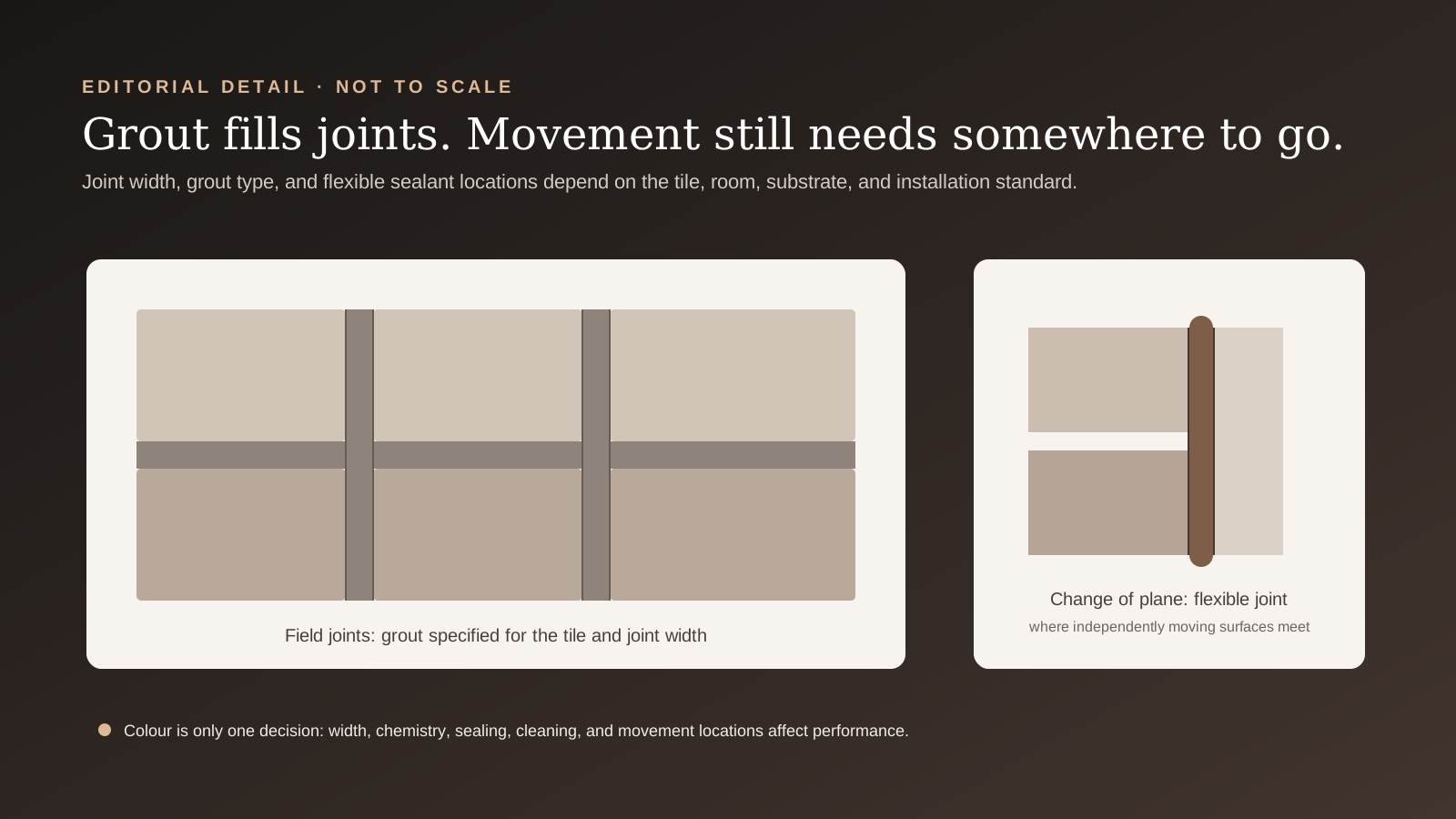
Learn how grout choice affects tile installation, including colour, joint width, sanded vs unsanded grout, epoxy grout, showers, backsplashes, and maintenance.
Key answer
Grout changes the design and the performance
Grout choice affects tile installation in three ways: it changes the finished look, it affects how the joints perform, and it shapes the maintenance routine after the installer leaves. Colour decides whether the tile feels calm or graphic. Joint width decides how much grout the eye sees. Grout type decides whether the product suits the tile, room, moisture level, and traffic.
This is why grout should be chosen before tile day, not after the last tile is set. A white subway tile with bright white grout, warm grey grout, charcoal grout, or coloured grout can read as four different installations. A large-format porcelain floor with tight joints feels very different from handmade-look tile with wider, more visible grout.
For most Waterloo Region homes, the best grout decision is not the boldest one. It is the grout that supports the tile, suits the room, and can be maintained realistically in a kitchen, bathroom, shower, entry, laundry room, or heated floor.
Grout colour: matching, soft contrast, or strong contrast
Matching grout keeps the surface quiet. It is useful when the tile has movement, texture, veining, handmade variation, or a large-format stone look that should feel continuous. A close grout match can also make small rooms feel less busy because the eye reads the tile as one broader surface.
Soft contrast is often the safest premium choice. Instead of pure white grout with white tile or black grout with white tile, a warm grey, greige, beige, taupe, or soft charcoal can define the tile without turning every joint into a grid. This works especially well on kitchen backsplashes, bathroom walls, and shower walls.
Strong contrast should be intentional. Dark grout with light subway tile can look crisp, graphic, and traditional, but it also highlights every line, every layout decision, and every imperfect cut. If the tile is handmade, irregular, or installed over walls that are not perfectly square, high contrast can make the variation more obvious.
Joint width changes the whole room
Grout colour gets the attention, but grout width may matter just as much. A tight 1/16-inch joint gives rectified porcelain or stone-look tile a cleaner, more tailored finish. A wider joint can suit handmade-look tile, zellige-style tile, tumbled stone, or tile with size variation because it gives the edges room to breathe.
The joint width is not only a design preference. Tile size variation, edge type, tile warpage, substrate flatness, manufacturer recommendations, and installation conditions all affect the minimum joint that makes sense. Forcing a handmade or uneven tile into a joint that is too tight can make the finished surface look more irregular, not less.
In a bathroom tile installation, narrower joints can help a room feel calmer, while wider or contrasting joints can add rhythm. On floors, grout width also affects cleaning and traction because more joints mean more texture and more grout to maintain.
Grout type comparison: sanded, unsanded, epoxy, and premixed
| Grout type | Best fit | Important caveat |
|---|---|---|
| Sanded cement grout | Wider joints, many floor tile projects, ceramic or porcelain with joints around 1/8 inch or larger. | The sand can scratch delicate tile, and traditional cement grout may need sealing depending on the product and location. |
| Unsanded cement grout | Narrow joints, vertical surfaces, glass, polished stone, marble, and delicate tile that could scratch. | It can shrink or crack in joints that are too wide, so it should not be forced into the wrong application. |
| High-performance cement grout | Bathrooms, kitchens, floors, and areas where stronger colour consistency and better performance are useful. | Costs more than basic cement grout and still needs the correct joint width, mixing, cleanup, and cure process. |
| Epoxy grout | Showers, backsplashes, high-use kitchens, and areas where stain resistance and low absorption are priorities. | More difficult and expensive to install; cleanup timing and haze control are less forgiving. |
| Premixed or single-component grout | Some kitchens, bathrooms, and smaller scopes where colour consistency and convenience matter. | Product properties vary, so the specific manufacturer instructions matter more than the category name. |
The table is a planning tool, not a substitute for the product data sheet. The exact tile, joint width, room, cleaning exposure, and manufacturer instructions should decide the final grout type.
Sanded vs unsanded grout is mostly about width and surface
Sanded grout is generally used where joints are wider and strength is important. The sand helps the grout hold its shape and resist shrinkage, which is why it is common on many floor installations and wider-joint tile layouts.
Unsanded grout is smoother and better suited to narrow joints and delicate surfaces. It is commonly considered for glass tile, polished stone, marble, and wall applications where a sanded product could scratch or where the joint is too tight for sanded grout to pack properly.
The mistake is choosing grout type only by room. A backsplash can use different grout than a floor, but the tile surface and joint width still matter. A shower wall, floor tile, handmade backsplash, and rectified porcelain floor should not be treated as the same grout decision.
Epoxy grout is useful, but it is not a shortcut
Epoxy grout is often chosen because it is highly stain-resistant and low absorption. It can be a strong option for showers, kitchen backsplashes, laundry areas, and high-use tile surfaces where homeowners want easier cleaning and better resistance to everyday staining.
It is not automatically the right choice for every project. Epoxy grout usually costs more, can be harder to work with, and requires tighter control during installation and cleanup. On some tile surfaces, haze can be difficult to remove if the installer misses the working window.
Most importantly, epoxy grout does not replace proper waterproofing. In a shower tile installation, the membrane, substrate, drain, slope, corners, curb, niche, and penetrations still do the water-management work. Grout is part of the finish, not the whole wet-area assembly.
How grout changes backsplashes
On a kitchen backsplash, grout choice changes both the design and the cleaning routine. A matching grout with handmade-look tile can make the wall feel soft and layered. A grey grout with white subway tile can feel classic and tailored. A strong dark grout can create a graphic pattern but will make every joint visible.
Cooking zones need practical thinking. Behind a range or sink, very light grout can show oil, sauce, coffee, and water staining faster. Highly textured tile with wide grout can look beautiful but may need more cleaning than a smoother glazed ceramic or porcelain.
If the backsplash includes outlets, open ends, windows, or a range hood, grout contrast also affects how visible the cuts and transitions become. For more selection planning, see our guide on how to choose kitchen backsplash tile.
How grout changes bathroom floors and showers
In bathrooms, grout has to support moisture habits, cleaning, and the look of the room. Matching grout can make large-format porcelain feel calmer, while a soft contrast can help smaller tile feel intentional. Very dark or very light grout may need more maintenance than expected depending on water hardness, soap residue, and cleaning products.
Shower floors are different from shower walls. A shower floor often uses smaller tile or mosaics to follow slope, which means more grout lines. Those joints can help with traction and drainage patterning, but they also need consistent cleaning. The grout type should suit wet exposure, joint width, and the tile itself.
For shower walls, the grout should be selected alongside the waterproofing plan, not instead of it. If a shower has a niche, bench, curb, or large-format wall tile, the visible grout lines and the hidden waterproofing and tile prep need to be planned together.
How grout changes floors, entries, and heated tile
On floors, grout has to tolerate traffic. Entryways and mudrooms in Ontario see salt, grit, wet boots, and repeated cleaning. A grout colour that is too pale may look fresh on day one but show soil quickly. A medium neutral often performs better visually over time.
Large-format floor tile usually looks best with a restrained grout colour and a planned joint width. The goal is often a calm surface, so grout should support the tile rather than compete with it. Small format tile, checkerboard, and patterned floors can use grout more visibly, but the layout has to be precise.
For heated floor tile, grout choice still depends on tile type, joint width, and room use. Heat does not fix movement, substrate issues, or weak mortar coverage. If grout cracks repeatedly, the problem may be movement or prep, not colour choice.
Grout maintenance should be part of the decision
Traditional cementitious grout may need sealing, especially in areas exposed to staining, moisture, or heavy traffic. The interval depends on the grout product, sealer, room use, and cleaning routine. Epoxy and some single-component grouts are lower maintenance, but they still need regular cleaning.
Maintenance starts with the right cleaner. Harsh products, bleach-heavy routines, abrasive pads, and acidic cleaners can damage some grout or tile surfaces. For floor-care details, see our guide on how to maintain tile floors in Ontario homes.
If grout is cracking, powdering, staying dark, or repeatedly growing mould, do not treat it as only a cleaning problem. It may point to movement, moisture, poor ventilation, failed silicone, wrong grout type, or an issue behind the tile.
Questions to answer before choosing grout
Before approving the grout, confirm the tile material, edge type, tile size, joint width, room use, wet exposure, traffic level, cleaning expectations, and whether the grout needs sealing. Also confirm whether the selected tile is sensitive to staining or scratching during grouting.
Ask to see grout samples beside the actual tile and under the room's lighting. A grout that looks neutral in a store can look yellow, blue, pink, or too stark once it sits beside your tile, countertop, vanity, or floor.
A premium installation treats grout as part of the design and the assembly. The tile, substrate, layout, grout, silicone joints, edge profiles, and maintenance plan should all make sense together.
Ready to choose grout before tile day?
Grout choice affects tile installation because it changes the surface visually and technically. Colour controls contrast. Width controls rhythm. Type controls suitability. Maintenance controls how the installation looks after real use.
Choose grout once the tile, room, surface, and installation details are understood. Avoid making the decision from a tiny colour strip at the last minute.
Moonka Tiles Co. plans tile, layout, grout, waterproofing, floors, showers, backsplashes, and custom tile details across Waterloo Region. Send your tile details through the contact form.
Frequently asked questions
What grout colour should I choose for tile?
Choose matching grout for a calm, continuous look, soft contrast for subtle definition, and strong contrast only when you want the tile pattern to stand out. For heavy-use kitchens and entries, medium neutral grout is often easier to maintain than bright white.
Is sanded or unsanded grout better?
It depends on joint width and tile surface. Sanded grout is usually better for wider joints and many floors. Unsanded grout is smoother and often better for narrow joints, delicate tile, polished stone, glass, and some vertical applications.
Is epoxy grout worth it?
Epoxy grout can be worth it in showers, backsplashes, kitchens, and high-use areas where stain resistance and low absorption matter. It costs more and is harder to install, so it should be chosen for the right reason, not by default.
Does grout make tile waterproof?
No. Grout is part of the tile finish, not the complete waterproofing system. Showers and wet areas need a proper substrate, membrane, slope, drain, corners, and penetrations planned behind the tile.
Can grout colour make tile look larger or smaller?
Yes. Matching grout makes tile read as a calmer surface and can make a room feel less busy. Contrasting grout outlines every tile, which can make small tile feel more patterned and large tile feel more segmented.
Sources and further reading
Technical claims are checked against the following primary or specialist references. Product-specific instructions always take precedence for the assembly being installed.
- Tile Council of North America: grout FAQUsed for: Grout-joint width, movement at changes of plane, flexible sealants, discolouration, and maintenance context.
- MAPEI Canada: Ultracolor Plus FA technical informationUsed for: A product-specific example of grout application limits, mixing, cure, cleaning, and maintenance requirements.