Large Format Tile Trends in Kitchener-Waterloo Homes (2026)
Explore practical 2026 large-format tile ideas for Kitchener-Waterloo homes, including grout lines, stone looks, flatness, lippage, showers, and floors.
Key answer
Large format tile is about calm, not just size
The recurring large-format looks we are asked to help plan in Kitchener-Waterloo homes for 2026 are calmer floors, fewer grout lines, large stone-look porcelain, matte finishes, warm neutrals, and shower walls that feel more architectural than busy. This is a practical design-and-installation guide based on those project conversations, not a measured regional market survey.
Large format tile is not only a design choice, though. It changes the installation. Bigger tile needs flatter substrates, careful layout, the right mortar coverage, clean handling, and stronger lippage control. If the prep is rushed, the scale that makes the room feel premium can also reveal every uneven edge.
This guide is for homeowners planning floor tile installation, bathroom tile, shower walls, or a custom tile feature in Waterloo Region and trying to decide where large tile makes sense.
1. Fewer grout lines for a quieter room
The main reason homeowners ask for large format tile is simple: fewer grout lines. In a bathroom, kitchen, hallway, or laundry room, reducing grout breaks can make the surface feel calmer, easier to scan, and more like a continuous architectural finish.
This trend fits Kitchener-Waterloo homes where renovations are moving toward cleaner sightlines, larger vanities, glass shower panels, quiet millwork, and warm natural materials. A 24-by-24 inch floor tile, a 24-by-48 inch shower wall tile, or a large stone-look porcelain panel can make the room feel more settled.
The design caveat is scale. A large tile should feel proportionate to the room. If the room is narrow, full of jogs, or interrupted by too many fixtures, the layout may create awkward cuts. The best result starts with a dry layout conversation before tile is ordered.
2. Stone-look porcelain without the same maintenance load
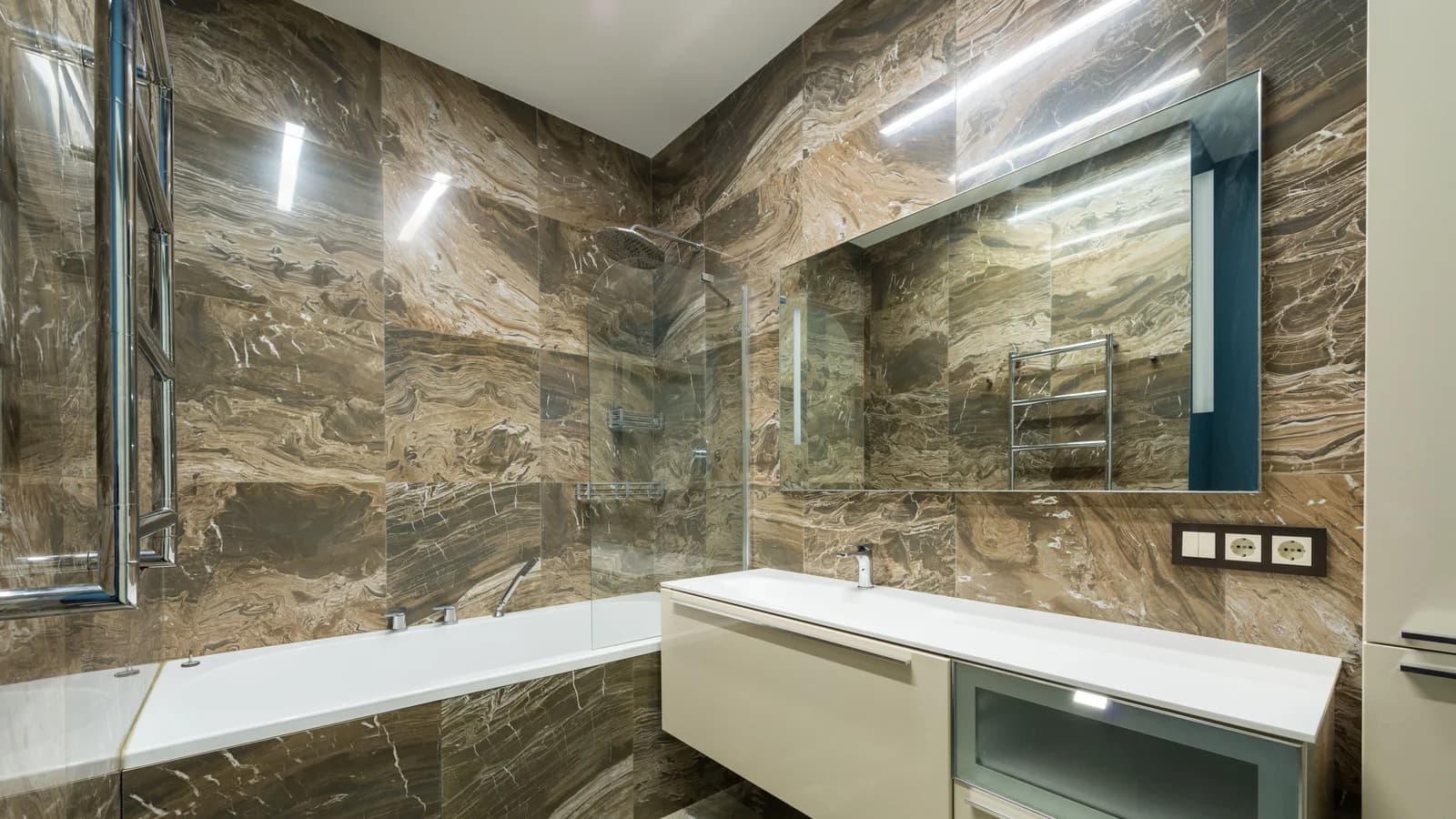
One of the biggest 2026 design directions is natural character: stone movement, warmer veining, soft variation, and surfaces that feel more collected than stark. Large-format porcelain fits that direction because it can create a marble, limestone, travertine, concrete, or terrazzo look with lower routine maintenance than many natural stone surfaces.
This works especially well in ensuites, powder rooms, kitchens, fireplaces, and open floors where the tile has enough space to show its pattern. The fewer the grout interruptions, the more the veining or stone movement can read as one calm surface.
For wet areas, porcelain can be a practical choice, but the finish still matters. A polished wall tile can look beautiful in a shower, while a floor usually needs a surface and grout strategy that considers slip resistance, cleaning, and the way water moves through the room.
3. Large square tile is replacing busy floor layouts
Large square tile is becoming a strong alternative to small-format floor patterns. It feels clean without being cold, especially when paired with warmer cabinet finishes, softer wall color, brushed metal fixtures, or natural wood accents.
For main floors, entries, laundry rooms, and larger bathrooms, square formats can reduce visual clutter. They also make it easier to align the tile with walls, vanities, islands, and sightlines from adjacent rooms.
The practical limitation is that square does not mean simple. A large square tile over a wavy substrate can show lippage quickly. If the existing floor has movement, old layers, dips, or transition-height issues, the prep plan matters as much as the tile selection.
4. Large-format shower walls are getting more intentional
Large-format shower walls are popular because they feel spa-like and reduce grout maintenance. Instead of a wall broken into many small pieces, the shower can read as a single stone or porcelain surface with quieter joints.
This works best when the shower layout is planned early. Valve placement, niche size, bench location, curb height, glass hardware, and tile size should all be discussed before the waterproofing and board layout are finalized. A large tile can make a shower look custom, but only when the hidden assembly supports it.
For a shower tile installation, large wall tile still needs careful waterproofing, flat walls, correct mortar, and clean cuts around fixtures. It is not a shortcut. It is a finish that rewards better planning.
5. Continuous bathroom floors need slope and transition planning
Homeowners often want the bathroom floor and shower area to feel connected. Large format tile can support that look, especially in curbless or low-curb bathrooms where the design goal is a continuous, accessible, hotel-like surface.
The challenge is drainage. Shower floors need slope, and large tile does not bend to slope the way mosaics do. Some showers need a companion mosaic, a linear drain, envelope cuts, or a different tile format inside the wet area. The design should follow the drainage plan, not fight it.
This is where waterproofing and tile prep affects the visible result. Drain location, pan construction, curb details, glass lines, and tile size all need to be coordinated before the final tile order.
6. Matte texture is becoming the premium default
High-gloss large tile can still work on walls, but matte and satin finishes are becoming more common for floors because they feel quieter and more livable. A soft matte stone-look porcelain can hide everyday dust and footprints better than a mirror-like surface.
Texture should be chosen carefully. Too smooth can be a concern in wet areas. Too rough can become difficult to clean, especially in showers, entries, and homes with pets or winter grit. The best large format tile has enough surface character to suit the room without making maintenance harder than necessary.
In Ontario homes, entryways and mudrooms deserve extra thought. Salt, slush, grit, and boots can make a beautiful floor work harder than expected. The tile finish, grout colour, transition height, and cleaning routine should all be chosen together.
Where large format tile works best in Kitchener-Waterloo homes
Large format tile is strongest in rooms with clean sightlines and enough open surface to let the scale breathe. That often means ensuite floors, main bathroom walls, open-plan kitchens, entries, laundry rooms, fireplaces, and large shower walls.
It can also work well in a custom tile installation where the goal is a stone-slab effect without using a full natural stone slab. Feature walls, tub surrounds, fireplace faces, and full-height backsplashes can all benefit from fewer joints and calmer pattern movement.
It is less forgiving in tiny rooms with many jogs, heavily out-of-square walls, older floors with movement, or shower pans that need complex slope. Those projects may still use large tile, but the layout and prep need to be more deliberate.
Installation considerations: flatness, lippage, and handling
Large format tile makes substrate flatness more important. Small tile can absorb some surface variation across many grout joints. Large tile cannot. If the floor or wall has dips, humps, twist, or old patchwork, the finished surface can show uneven edges.
Lippage is the visible height difference between neighbouring tile edges. It is especially noticeable with large rectified tile and narrow grout joints because the clean edge gives the eye less tolerance. Good lippage control starts before setting tile: surface review, layout planning, mortar choice, trowel technique, tile handling, and appropriate leveling aids where useful.
Large tile can also be physically harder to work with. A 24-by-48 inch porcelain tile is more demanding to lift, back-butter, place, adjust, and cut than a smaller tile. That affects time, tooling, waste allowance, and the number of hands needed for a clean installation.
What to decide before ordering large format tile
Before ordering, confirm the room dimensions, tile size, tile thickness, edge type, finish, grout colour, trim profiles, transitions, and whether the tile will continue onto walls or into a shower. Also check whether the selected tile has matching mosaics, bullnose, or companion pieces if the project needs them.
Ask how the layout will handle doorways, vanity legs, toilet flanges, floor vents, shower glass, niches, drains, and visible walls. A premium large-format installation should avoid tiny sliver cuts where the eye lands first.
If the tile is for a heated floor, confirm the floor assembly and cure time before the heating system is activated. Large porcelain can work beautifully over heated floor tile, but the heating layer, mortar, substrate, and tile format need to be planned as one assembly.
Ready to plan large format tile in Kitchener-Waterloo?
Large format tile trends in Kitchener-Waterloo homes are moving toward calmer rooms, fewer grout lines, stone-look porcelain, warm matte finishes, and showers or floors that feel more architectural. The trend works when design scale and installation prep are treated together.
Choose large tile when the room can support the format, the substrate can be prepared properly, and the layout has been planned around cuts, transitions, slope, and grout. Avoid treating it as a fast way to cover a rough surface.
Moonka Tiles Co. installs large-format floors, shower walls, bathrooms, entries, heated floors, and custom tile features across Waterloo Region. Send your project details through the contact form.
Frequently asked questions
What counts as large format tile?
Many homeowners use large format to describe tile 12 by 24 inches or larger, while current design conversations often focus on 24 by 24, 24 by 48, and slab-look porcelain panels. The larger the tile, the more important flatness and layout become.
Is large format tile good for small bathrooms?
Large format tile can work in small bathrooms when the layout avoids awkward sliver cuts and the surface is properly prepared. It can make the room feel calmer, but it is not ideal for every shower floor because drainage slope may require smaller tile or envelope cuts.
Does large format tile need a perfectly flat floor?
It needs a very flat, stable surface. Large tile has less tolerance for dips, humps, movement, and old patchwork than small tile. Surface prep, underlayment, leveling, and lippage control should be discussed before installation starts.
Is large format tile harder to install?
Yes. Large tile is heavier, more difficult to cut and place, and more likely to reveal substrate problems. It often needs better prep, careful mortar coverage, layout planning, and more handling time than smaller tile.
Is large format tile slippery?
Slip risk depends on the tile finish, texture, grout joints, and where it is installed. Matte or lightly textured porcelain is often better for floors than polished tile, especially in bathrooms, entries, and areas that see water or winter grit.
Sources and further reading
Technical claims are checked against the following primary or specialist references. Product-specific instructions always take precedence for the assembly being installed.
- MAPEI Canada: surface preparation for tileUsed for: Why large tile makes substrate flatness and preparation more demanding, including cited large-format flatness tolerances.
- Tile Council of North America: expanded look at large-format tileUsed for: Large-format handling, mortar coverage, flatness, lippage, and installation-planning context.
- Tile Council of North America: ceramic tile FAQUsed for: Tile classifications, wet-area assembly principles, and the distinction between tile or grout and the water-management system below.
- Tile Council of North America: current ANSI tile standardsUsed for: The standards framework behind tile material, installation, mortar, grout, and product-use recommendations.