
Why Shower Waterproofing Matters Before Tile
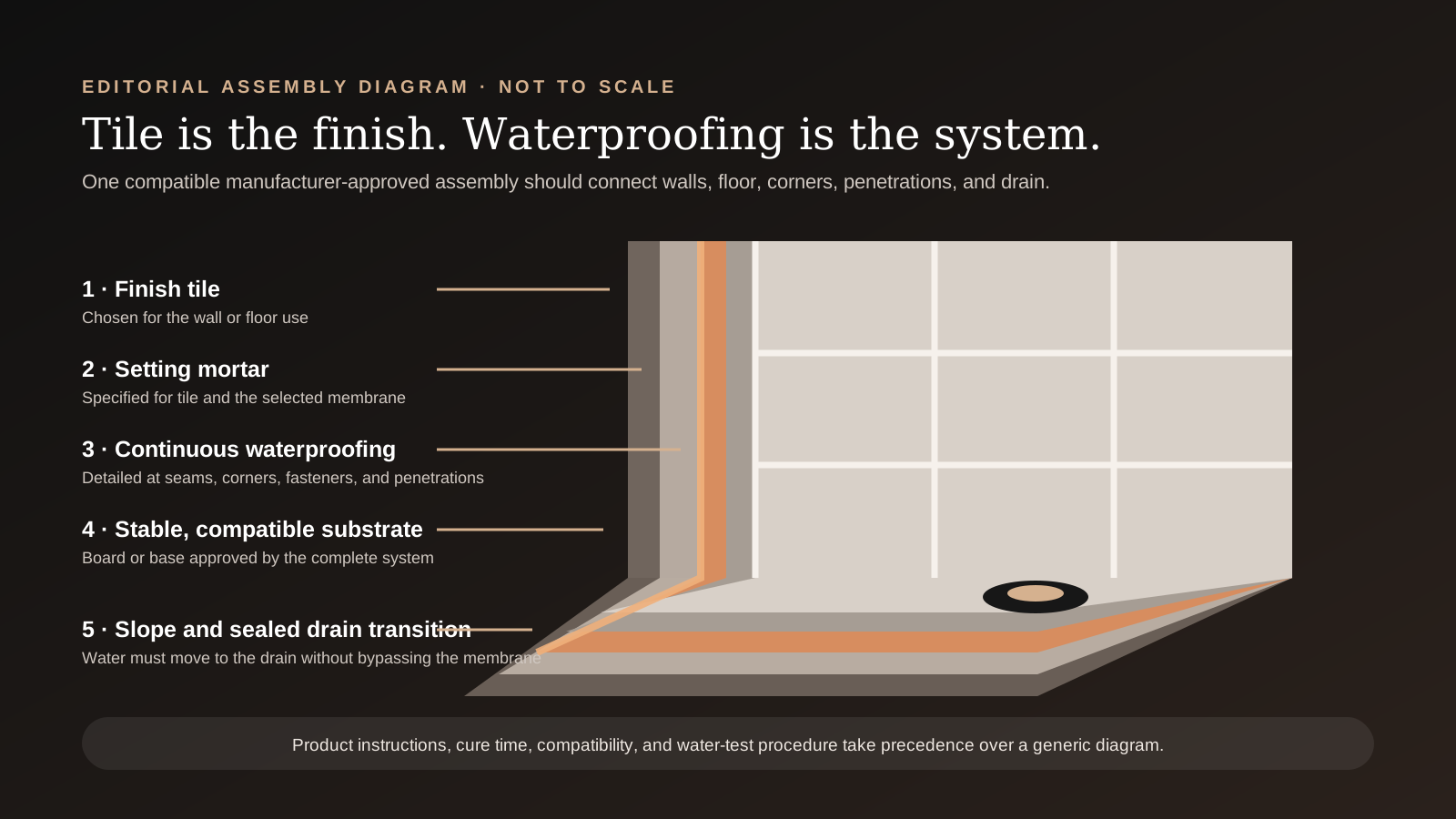
Understand shower waterproofing before tile, including membranes, backer boards, seams, corners, drains, niches, benches, curbs, and homeowner questions.
Key answer
Waterproofing goes behind the tile, not in the tile itself
Shower waterproofing matters before tile because tile and grout are the visible finish, not the full water-management system. A shower needs a suitable substrate, waterproofing membrane, sealed seams, protected corners, drain integration, and careful treatment around niches, benches, curbs, and penetrations before tile is installed.
Porcelain, ceramic, stone, and grout can all manage water differently, but none of them should be treated as a complete shower waterproofing plan on their own. Water will reach grout joints, corners, edges, and fixture penetrations. The assembly behind the tile has to be ready for that.
This guide is for homeowners planning a shower tile installation and trying to understand what should happen before the tile surface starts to look finished.
What waterproofing has to protect
| Shower area | Why it matters | Planning note |
|---|---|---|
| Walls | Daily water and vapour exposure can reach seams and penetrations. | Use an appropriate backer and waterproofing approach before tile. |
| Shower floor or pan | Water must slope to the drain without collecting in corners. | Tile size, mosaic choice, slope, and drain type must work together. |
| Drain connection | The drain is a critical transition between waterproofing and plumbing. | Confirm drain style before waterproofing and layout. |
| Niche | A niche creates inside corners and a horizontal shelf where water can sit. | Plan size, slope, waterproofing, and tile cuts early. |
| Curb or entry | Curbs see foot traffic, glass, and water at the shower edge. | Protect corners and avoid unnecessary penetrations through waterproofing. |
| Bench | Benches add horizontal surfaces and multiple corners. | Slope, waterproofing, and tile layout need to be coordinated. |
The hardest parts of a shower are often the parts homeowners notice least before construction: corners, seams, pipe penetrations, curbs, benches, niches, and drains. These details carry the most water-management responsibility.
A clean tile layout depends on waterproofing decisions. If the niche size, drain, curb, or bench is changed late, the waterproofing and tile layout may both have to adjust.
Backer board is not the same as waterproofing
A suitable tile backer gives tile a stable surface. Waterproofing protects the assembly from water. Some shower systems combine these roles through foam boards or membrane-faced products, while other assemblies pair cement board with a sheet or liquid-applied membrane.
The important point is that the system has to be intentional. Standard drywall, plywood, and water-damaged surfaces do not become shower-ready because tile is installed over them. Even cement board needs the correct waterproofing approach for the chosen assembly.
Before tile starts, ask what backer material is being used, how seams and corners are treated, and how the waterproofing ties into the drain, niche, curb, and bench.
Sheet membranes, liquid membranes, and foam board systems
Common shower waterproofing approaches include sheet membranes, liquid-applied membranes, foam board systems, and membrane-faced backer boards. Each can work when installed as a complete system and used in the right conditions.
Sheet membranes can create a continuous layer when seams, overlaps, and corners are treated correctly. Liquid membranes can be effective when applied at the correct thickness and allowed to cure. Foam board systems can combine backer and waterproofing functions, but seams, fasteners, drains, and transitions still need careful treatment.
The brand matters less than the execution. Mixing parts without understanding compatibility, skipping cure time, or leaving penetrations untreated can weaken an otherwise good system.
Niches, benches, curbs, and drains should be designed before tile
A niche is not just a decorative box in the wall. It has corners, a back, side returns, a bottom shelf, and a slope that should move water out of the niche. Its size also affects grout lines and tile cuts. A niche planned after tile starts can force awkward layout compromises.
Curbs and benches need similar planning. They are exposed to water, movement, glass hardware, and cleaning. Horizontal surfaces should be sloped appropriately, and waterproofing should be protected before finish tile is installed.
Drain location affects slope and tile size. A small mosaic floor can follow a traditional centre drain more easily than large tile. A linear drain may support a different look, but it needs early planning around slope, waterproofing, and glass.
Waterproofing affects tile choices
Tile selection should happen with the shower assembly in mind. Large-format porcelain can look excellent on shower walls, but shower floors often need smaller formats, mosaics, envelope cuts, or a drain plan that supports larger tile. Natural stone may need sealing and more maintenance.
Grout choice also matters. Wider joints, textured tile, mosaics, and high-use shower floors all change cleaning and maintenance. Epoxy grout may be useful in some situations, while cementitious grout may be appropriate in others when specified correctly.
The best shower choices connect the visible design to the hidden system: substrate, waterproofing, slope, drain, tile format, grout, silicone, ventilation, and maintenance.
Common waterproofing shortcuts to avoid
The most dangerous shortcut is assuming that tile and grout will stop all water. They will not. Another common shortcut is treating moisture-resistant drywall or old wall board as if it were a proper shower substrate. In a wet area, the surface behind the tile has to be selected for the assembly, not for convenience.
Other shortcuts include skipping membrane treatment at corners, puncturing the curb unnecessarily, leaving niche shelves flat, mixing incompatible products, rushing cure time, or installing new tile over an old shower whose waterproofing is unknown. These decisions can be hidden by a clean tile surface until water finds the weak point.
A good shower plan should make the hidden steps understandable. Homeowners do not need to know every trade detail, but they should be able to hear a clear explanation of the substrate, waterproofing method, drain tie-in, seams, corners, and cure time.
How waterproofing problems show up later
Waterproofing problems rarely announce themselves immediately. Early signs can look like repeated grout cracking, dark joints that never dry, swollen trim, musty odour, peeling paint near the shower, loose tile, or water stains on the ceiling below.
By the time a leak is obvious, water may have been moving behind the tile for weeks or months. That is why the pre-tile waterproofing stage matters so much. It is easier to build the shower correctly than to diagnose a finished shower after symptoms appear.
If an existing shower already has loose tile, recurring mould, soft walls, or stains below the bathroom, the new tile conversation should start with investigation. Replacing the visible tile without addressing the wet assembly can recreate the same problem.
Questions to ask before shower tile starts
Ask what waterproofing system will be used, what substrate is being installed, how the drain will connect, how seams and corners will be treated, whether the niche and bench are sloped, how the curb is protected, and how long materials need before tile, grout, and shower use.
Also ask how tile size affects the shower floor. If you selected a large tile for the entire bathroom, confirm whether it can work on the shower pan or whether a companion mosaic or different drain plan is better.
Moonka Tiles Co. plans waterproofing and tile prep as part of shower installation, not as an afterthought. Send your shower details through the contact form.
Frequently asked questions
Is tile grout waterproof?
Grout helps fill joints, but it should not be treated as the shower waterproofing system. A shower needs waterproofing behind the tile to protect seams, corners, penetrations, drains, niches, curbs, and benches.
Does cement board waterproof a shower?
Cement board can be a suitable tile backer, but it is not automatically a complete waterproofing system. It is commonly paired with a sheet membrane, liquid membrane, or another approved waterproofing approach.
When is shower waterproofing installed?
Waterproofing is installed after demolition and substrate preparation, before the visible tile is set. Details such as drains, niches, curbs, benches, and seams should be planned before waterproofing starts.
Do shower niches need waterproofing?
Yes. Niches have inside corners and a horizontal shelf where water can sit, so they need careful waterproofing, slope, and tile layout before the shower is finished.
Can I tile over an old shower without re-waterproofing?
If the old shower has leaks, loose tile, cracked grout, mould, or unknown waterproofing, tiling over it is risky. A failing shower should be opened and assessed before new tile is installed.
Sources and further reading
Technical claims are checked against the following primary or specialist references. Product-specific instructions always take precedence for the assembly being installed.
- Tile Council of North America: shower installation FAQUsed for: System compatibility, shower substrate, membrane, backer-board, and manufacturer-instruction considerations.
- ANSI A326.3: wet DCOF and product-use classificationsUsed for: Why no single DCOF number determines shower-floor suitability and why drainage, texture, joints, contaminants, and barefoot use also matter.
- Schluter Systems Canada: water testing a shower systemUsed for: Pre-tile water testing as assembly quality control, with cure time and procedure tied to the installed system.