
Signs Your Shower Needs Re-Tiling
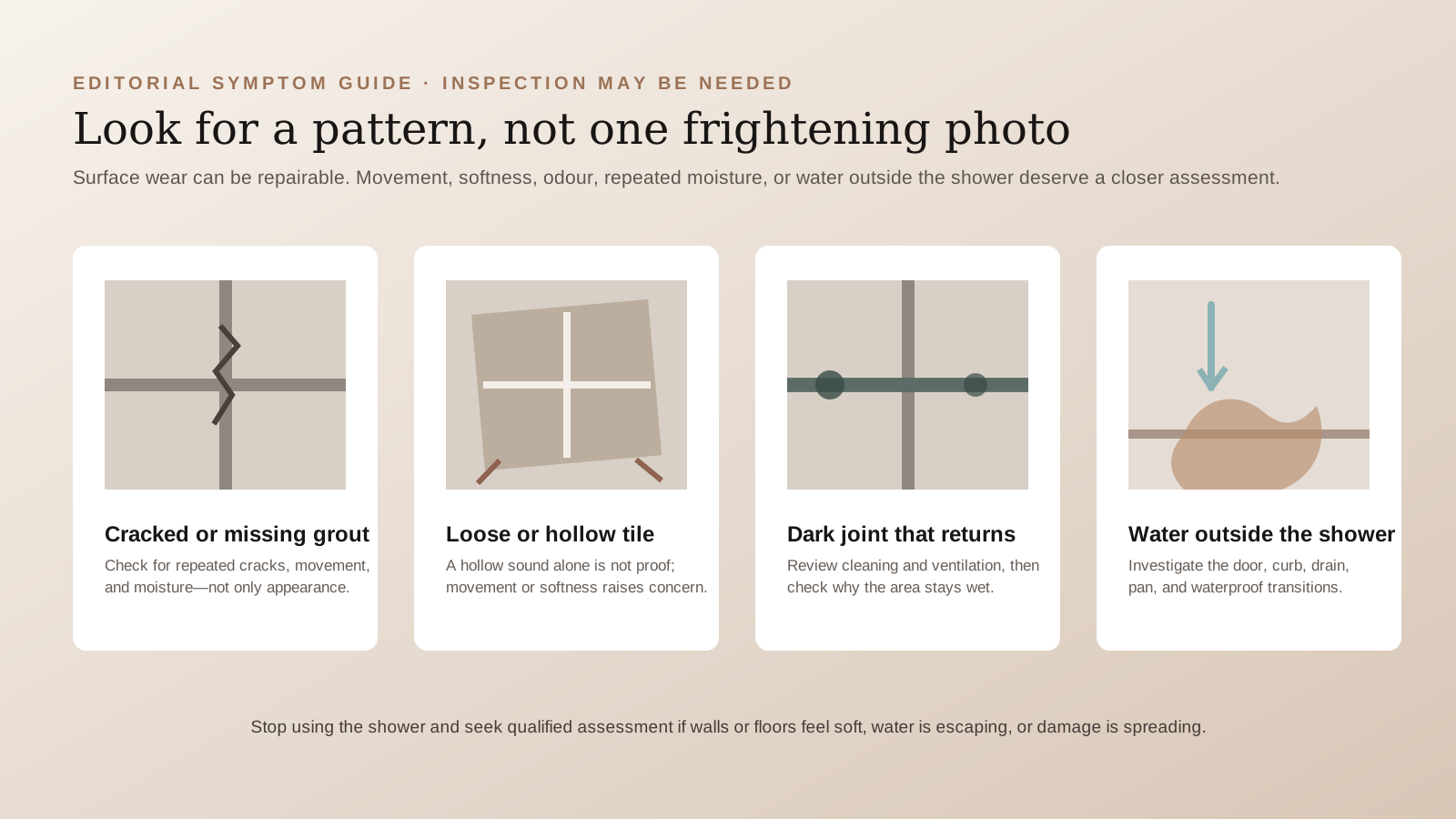
Learn the signs your shower needs re-tiling, including cracked grout, loose tile, recurring mould, leaks, soft walls, waterproofing failure, and next steps.
Key answer
Re-tile when the shower system is failing, not just when tile looks dated
The clearest signs your shower needs re-tiling are loose tile, cracked or missing grout, soft walls, recurring mould, water stains, failed silicone, hollow sounds, and leaks outside the shower. Cosmetic age alone does not always require replacement. Water getting behind the tile assembly does.
A shower can look acceptable from a distance while the substrate behind the tile is deteriorating. Once water has reached drywall, wood framing, old mastic, or a failed backer board, cleaning the surface will not solve the problem. The right fix may be full removal, substrate repair, waterproofing, and a new shower tile installation.
This guide is for Ontario homeowners trying to decide whether they need minor grout repair, regrouting, silicone replacement, tile repair, or a complete shower re-tile.
Shower re-tiling warning signs
| Warning sign | What it may mean | Likely next step |
|---|---|---|
| Cracked or missing grout | Water can enter joints and reach the layers behind the tile. | Assess whether regrouting is enough or whether movement/water damage is present. |
| Loose or hollow tile | The bond may be failing, the substrate may be damaged, or water may be trapped. | Remove affected tile and inspect the assembly before patching. |
| Recurring mould or dark grout | Moisture may be staying in the joint, surface, or wall cavity. | Improve ventilation and inspect for failed grout, silicone, or waterproofing. |
| Soft wall or flexing tile | Backer board, drywall, or framing may have deteriorated. | Stop using the shower if severe and plan a tear-out assessment. |
| Water outside the shower | The curb, door, drain, pan, or waterproofing transition may be failing. | Investigate before replacing only visible caulk. |
| Repeated silicone failure | Movement, poor prep, trapped moisture, or wrong joint treatment may be involved. | Find the cause before resealing again. |
A single surface issue does not automatically mean a full re-tile. The pattern matters. One small grout crack in a dry corner is different from several loose tiles, damp drywall, odour, dark joints, and water stains below the bathroom.
When in doubt, treat moisture symptoms seriously. Showers are high-use wet areas, and small openings can become larger problems when they are hit by water every day.
Cracked grout, missing grout, and failed silicone
Grout is not the main waterproofing layer, but cracked or missing grout is still a warning sign. It lets water, soap, and dirt reach deeper into the tile assembly. If the waterproofing behind the tile is sound, the damage may be limited. If the assembly is old or poorly built, grout failure can expose a much larger issue.
Silicone matters at change-of-plane joints such as corners, tub-to-tile joints, curb transitions, and where tile meets glass or fixtures. If silicone keeps splitting, peeling, or turning black, the problem may be movement, trapped moisture, poor ventilation, or a joint that was not prepared properly.
Regrouting or resealing can be appropriate when the tile is solid and the substrate is dry. It is less useful when tile is loose, walls are soft, or the same joint keeps failing after repeated repairs.
Loose tile, hollow sounds, and soft walls
Loose tile is one of the strongest signs that a shower needs more than surface maintenance. If a tile moves when pressed, sounds hollow, or has a visible gap behind it, the bond may be failing. In a shower, that failure can involve water, old adhesive, substrate movement, or damaged backer board.
Softness is more serious. A wall that flexes, crumbles, or feels spongy behind the tile can point to deteriorated drywall, compromised backer board, or moisture-damaged framing. New tile should not be installed over a weak surface.
If loose tile is isolated, a repair may be possible. If several areas are hollow or the shower is older and water-damaged, a full tear-out is usually the cleaner path because it exposes the actual condition behind the finish.
Recurring mould and stains that keep coming back
Mould or mildew on the surface can be a cleaning and ventilation issue, especially in bathrooms without strong exhaust fans. But stains that keep returning in the same grout lines, corners, or lower wall areas deserve a closer look.
Persistent dark grout, pink or orange buildup, musty odour, bubbling paint near the shower, swollen trim, or discoloured ceiling below the bathroom can indicate that moisture is moving where it should not. Stronger cleaners may hide the symptom for a few days without correcting the wet assembly.
Before re-tiling, the cause should be addressed. That may include ventilation, slope, waterproofing, drain details, silicone joints, or replacing damaged materials behind the tile.
Tile-over-tile is rarely the answer for a failing shower
Tile-over-tile can be tempting because it avoids demolition, but it is not a good fix for a shower with loose tile, cracked grout, mould, water damage, or uncertain waterproofing. Adding another layer can hide the problem while increasing thickness at valves, edges, door openings, and corners.
A re-tile should start by deciding whether the existing assembly is sound enough to keep. In many failing showers, the most valuable part of the job is removing the old layers so the substrate, studs, curb, pan, and drain can be inspected.
If the shower is only outdated cosmetically and the existing tile is firmly bonded, dry, and properly built, options may be different. If the reason for re-tiling is water, movement, or mould, the assembly needs to be opened up.
Repair, regrout, or fully re-tile?
Repair may be enough when the issue is isolated: one chipped tile, a small silicone failure, or grout wear in a limited area with no movement or moisture signs. Regrouting can refresh a solid shower, but it depends on the existing tile bond and the condition below the surface.
A full re-tile is more likely when several tiles are loose, grout is failing across multiple walls, the shower pan is leaking, the wall is soft, the curb is swollen, the niche has water damage, or the shower was originally built over materials that do not belong in a wet area.
A premium shower replacement includes waterproofing and tile prep, layout planning, tile selection, grout selection, silicone details, and realistic maintenance guidance. The goal is not just a better-looking shower. It is a shower assembly that can handle daily water.
What to send before asking for a shower re-tile quote
Send wide photos of the full shower, closeups of grout cracks, corners, curb, niche, drain, valve wall, shower floor, ceiling below if stained, and any area that feels soft or loose. Include the age of the shower if known, whether it is used daily, and whether water appears outside the shower.
If you know the tile size, grout type, waterproofing system, or previous repair history, include that too. Those details help separate cosmetic re-tiling from a shower replacement that may need demolition, substrate repair, and new waterproofing.
Moonka Tiles Co. replaces and installs custom shower tile across Waterloo Region. Send your shower photos and request a re-tiling assessment.
Frequently asked questions
How do I know if my shower needs re-tiling?
Your shower may need re-tiling if tiles are loose, grout is missing or cracked across several areas, walls feel soft, mould keeps returning, water appears outside the shower, or there are stains below the bathroom.
Can I just regrout instead of re-tiling a shower?
Regrouting can work when the tile is firmly bonded and the substrate is dry. It is not enough when tile is loose, the wall is soft, water is leaking, or the waterproofing behind the tile has failed.
Is mouldy grout a sign of a leak?
Not always. Mouldy grout can come from poor ventilation and cleaning habits, but recurring stains in the same joints, musty odour, loose tile, or water marks nearby can point to a deeper moisture issue.
Can new tile be installed over old shower tile?
It is usually not recommended when the shower is failing. Tile-over-tile can hide water damage, add thickness, and leave old waterproofing problems in place. A failing shower should be inspected before another layer is added.
What is included in a proper shower re-tile?
A proper shower re-tile may include demolition, substrate repair, waterproofing, drain and slope review, tile layout, setting, grout, silicone, cleanup, and cure time before the shower is used again.
Sources and further reading
Technical claims are checked against the following primary or specialist references. Product-specific instructions always take precedence for the assembly being installed.
- Tile Council of North America: hollow and loose tile FAQUsed for: Why a hollow sound alone is not a diagnosis and how bond loss, contamination, movement, deflection, coverage, and cure conditions can contribute to loose tile.
- Tile Council of North America: grout FAQUsed for: Grout-joint width, movement at changes of plane, flexible sealants, discolouration, and maintenance context.
- Tile Council of North America: shower installation FAQUsed for: System compatibility, shower substrate, membrane, backer-board, and manufacturer-instruction considerations.