
Tile Installer vs DIY: Honest Breakdown for Ontario Homeowners
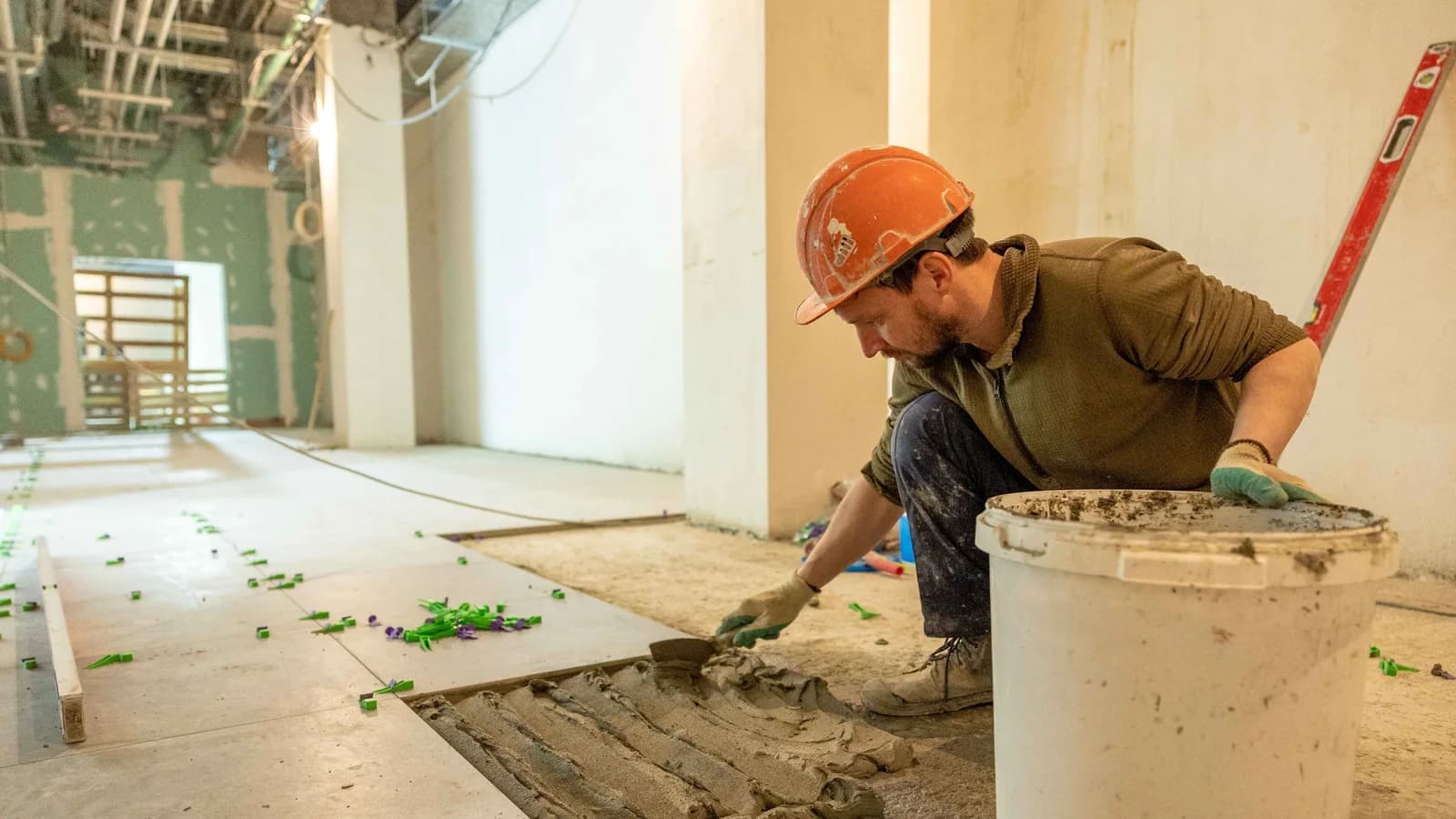
Compare hiring a tile installer vs DIY in Ontario, including backsplash projects, shower risk, prep, tools, waterproofing, heated floors, and cost.
Key answer
DIY can work for small dry areas, but wet rooms are different
The honest tile installer vs DIY answer is this: a careful homeowner may be able to handle a small dry backsplash or simple utility-room floor, but showers, bathroom waterproofing, large-format tile, heated floors, natural stone, and custom layouts usually belong with a professional tile installer.
Tile is unforgiving because the finished surface reveals every decision underneath it. Substrate flatness, layout, mortar coverage, waterproofing, movement joints, grout choice, tile cuts, and cure time all affect the final result. A project can look acceptable on day one and still fail if the prep was wrong.
This guide is for Ontario homeowners comparing DIY savings against the risk, tool cost, time, and finish quality of a professional custom tile installation.
Where DIY tile makes the most sense
| Project type | DIY fit | Why |
|---|---|---|
| Small kitchen backsplash | Reasonable for careful beginners | Dry vertical area, limited water risk, and easier access for layout corrections. |
| Laundry backsplash or mudroom wall | Possible | Low structural risk if the wall is sound and the tile is simple. |
| Small powder-room floor | Possible for confident DIYers | Small area, but toilet removal, floor flatness, and transitions still matter. |
| Large-format floor tile | Usually professional | Flatness, lippage control, mortar coverage, and cutting demands are higher. |
| Shower tile | Professional recommended | Waterproofing, slope, drain, seams, corners, and penetrations carry real failure risk. |
| Heated tile floor | Professional coordination recommended | Tile prep, mat layout, sensor placement, floor height, and electrical coordination must align. |
DIY is most reasonable when the area is dry, small, visible enough to work carefully, and not tied to waterproofing or hidden building assemblies. A backsplash still requires planning, but a mistake is usually more contained than a shower leak.
The best first DIY tile project is simple: standard tile size, straight lay pattern, clean wall, limited cuts, and no specialty edge detail. If the design requires herringbone, handmade tile, glass tile, mitred corners, or full-height precision, the difficulty changes quickly.
Where hiring a tile installer is usually worth it
Hiring a professional tile installer is usually worth it when the tile work is wet, expensive, highly visible, technically demanding, or hard to repair later. That includes showers, bathroom floors, heated floors, large-format porcelain, natural stone, curbless showers, niches, benches, stairs, and multi-room floors.
The professional value is not only speed. It is sequencing. A good installer knows how to inspect the substrate, plan start lines, avoid awkward slivers, account for movement, choose the correct setting materials, check coverage, and protect the room while materials cure.
For a bathroom tile installation, the difference between DIY and professional work often sits behind the tile: waterproofing, slope, wall flatness, floor prep, and transitions. If professional help is the better fit, use our Ontario tile-installer hiring checklist to compare proof, scope, insurance, contracts, and technical answers.
The hidden DIY costs homeowners forget
DIY tile is not free labour if it requires tools you will use once. A wet saw, snap cutter, mixing paddle, buckets, notched trowels, spacers, levelling clips, grinder, diamond blades, hole saws, knee pads, grout floats, sponges, membranes, backer board, waterproofing, and cleanup supplies can add up quickly.
Time is the other cost. A project a professional completes in 2 or 3 working days may take several weekends for a homeowner because each step requires research, setup, cutting, cleanup, and problem solving. That may be fine for a low-risk area. It becomes stressful when the only bathroom is out of service.
Material waste also matters. Pattern mistakes, bad cuts, cracked tile, incorrect trowel size, wrong mortar, or rework can reduce the savings. Specialty tile often has longer lead times, so replacing wasted pieces can delay the whole room. To weigh those costs against a professional scope, see what drives tile installation cost in Waterloo Region.
Why showers are a different level of risk
A shower is a wet assembly, not just a decorative wall. The visible tile and grout are not the waterproofing system. The critical work includes the substrate, membrane, seams, corners, drain, curb, niche, bench, pipe penetrations, slope, and cure time.
A DIY shower can fail quietly. Water may move behind the tile long before there is an obvious leak. By the time the symptom appears, the repair can involve tile removal, damaged backer board, framing repair, mould remediation, ceiling repair, or a full shower rebuild.
This is why Moonka recommends professional help for most shower tile installations. The finished shower should look calm, but the system behind it has to be deliberate.
Ontario-specific caveats: wet areas, heat, and permits
Ontario homeowners should be especially careful when tile work touches waterproofing, electrical planning, or other trade scopes. A tile installer can handle the tile-side preparation, but a project may also need plumbing, electrical, ventilation, or framing decisions before the surface is ready.
Heated tile floors are a good example. The mat or cable layout affects tile height, sensor placement, thermostat location, and floor prep, but the electrical side should be coordinated with the appropriate electrical trade and permit expectations. It should not be treated as a casual add-on after tile layout is underway.
The same thinking applies to showers. Waterproofing is not just a product choice; it is a system that has to work with drains, walls, seams, and penetrations. If a DIY plan involves guessing on those details, the safer move is to pause and get professional input before the room is closed up.
Large-format tile and natural stone are less forgiving
Large-format tile is popular because it creates fewer grout lines and a premium, quiet surface. It is also less forgiving than small tile. The floor or wall needs to be flatter, the mortar coverage needs to be right, and lippage is easier to see when long edges meet.
Natural stone adds another layer of judgment. Stone may need sealing, specific mortar, careful cleaning, and a layout that respects variation. Some stones are sensitive to staining or moisture. A DIY mistake with inexpensive ceramic tile is one thing; a mistake with premium stone is different.
If the tile is costly, hard to source, large, textured, handmade, or irregular, the installer is protecting more than labour time. They are protecting the material investment.
A practical decision checklist
DIY may be a fit if the room is dry, the tile is inexpensive, the pattern is simple, you can live with small imperfections, you have time, and a mistake will not cause water damage. Hiring a tile installer is the better fit if the room is wet, the tile is expensive, the layout is complex, the substrate is questionable, or the room needs to be finished efficiently.
Ask yourself whether you can confidently handle substrate prep, waterproofing, tile cuts, layout, mortar selection, grout, silicone, and cure time. If you are guessing on several of those, bring in a professional before tile is on the wall.
If you are still deciding, a project conversation can clarify the scope. Send photos, dimensions, tile details, and your ideal schedule through the contact form. Moonka Tiles Co. can help determine whether the work is a simple backsplash, a technical wet-area project, or a larger floor tile installation.
Frequently asked questions
Is tile installation a good DIY project?
Tile can be a good DIY project in small dry areas such as a simple backsplash. It is much riskier in showers, bathrooms, heated floors, large-format tile areas, natural stone projects, and rooms with substrate problems.
Is a kitchen backsplash DIY-friendly?
A small, straight-lay kitchen backsplash can be DIY-friendly for a careful homeowner. Handmade tile, herringbone, glass tile, full-height walls, many outlet cuts, or exposed edge details make the project more difficult.
Should I DIY a shower tile installation?
Most homeowners should not DIY a shower unless they understand waterproofing, slope, drain details, seams, corners, backer systems, mortar coverage, grout, and cure time. Shower failures can be expensive to repair.
Does DIY tile actually save money?
DIY can save labour on small projects, but tools, wasted tile, extra materials, longer timelines, and possible rework reduce the savings. On technical projects, doing it twice can cost more than hiring a professional once.
When should I hire a professional tile installer?
Hire a professional for showers, bathroom waterproofing, large-format porcelain, natural stone, heated floors, custom layouts, uneven substrates, or any tile work where failure would damage the home.
Sources and further reading
Technical claims are checked against the following primary or specialist references. Product-specific instructions always take precedence for the assembly being installed.
- Tile Council of North America: ceramic tile FAQUsed for: Tile classifications, wet-area assembly principles, and the distinction between tile or grout and the water-management system below.
- Tile Council of North America: current ANSI tile standardsUsed for: The standards framework behind tile material, installation, mortar, grout, and product-use recommendations.
- Electrical Safety Authority: in-floor heating cable and mat bulletinUsed for: Ontario notification, inspection-before-covering, certification-mark, thermostat, sensor, and installation requirements for electric floor warming.
- Electrical Safety Authority: notification and inspection guidanceUsed for: When Ontario electrical work requires notification, inspection, and coordination with a Licensed Electrical Contractor.
- Tile Council of North America: shower installation FAQUsed for: System compatibility, shower substrate, membrane, backer-board, and manufacturer-instruction considerations.